Thursday, July 9, 2015

Life Guards


For much of his life as a young man Charles Emerson Griffin served in the Nauvoo Legion. His service started in 1853 at the age of sixteen. From his autobiography,
“When sixteen years old I joined a minute company under Captain Robert T. Burton, and from that time on until I moved to Summit County, I held myself in readiness with horses, saddle, bridle, arms and forty rounds of ammunition to go to any place at any time when called upon.”
Charles joined the Life Guards sometime early in 1853. The first time he appears in a MUSTER ROLL is in November of 1853 as his unit was inspected and reorganized after a summer’s campaign during the Walker War. Charles is number 33 on the list of men.
Charles served in the most elite unit in the newly reconstituted Nauvoo Legion the Life Guards. The Guards had two Battalions of Cavalry and two Battalions of Infantry. Together these units made up what was considered the standing army for the Utah Territory. The Guards were usually the first force sent to face any major emergency.
 Within days of the opening salvos in the Walker War Lt. Colonel William Kimball was given ORDERS to assemble a unit and make a reconnaissance in force to the far end of Utah Valley. Part of his command was to be made up of men from the 1st Regiment of Cavalry. In his 1st REPORT back he names Hoses Cushing and John Smith of Charles’s own unit as members of his staff the indication being that Charles was also part of the command. Lt. Colonel Kimball sent back a detailed REPORT of the unit’s activities.
Later that summer Charles’s unit was received ORDERS to serve under George D. Grant in response to raids against the sawmills in Parley’s Park
The major action taken by the Life Guards in 1853 was an expedition to Sanpete County the epicenter of the Walker War. ORDER, 21, sent the unit on its way. We get some idea of the campaign from a REPORT written by the commanding officer in Manti.

In 1855 a select group from the Life Guards were sent East by ORDER of Brigham Young. The unit was to show the flag and take steps to demonstrate Mormon control over the eastern end of the Oregon Trail. Robert T. Burton was given ORDERS to assemble and lead the unit. He sent back a very detailed REPORT on the unit’s activities. At the end of the mission one of the most detailed MUSTER ROLLS on file was written. It acknowledges the men who served and is stamped with Brigham Young’s personal seal of approval. Click on images to enlarge.


Wednesday, July 8, 2015

Charles E Griffin Chapter-5 Salt Lake City 1848

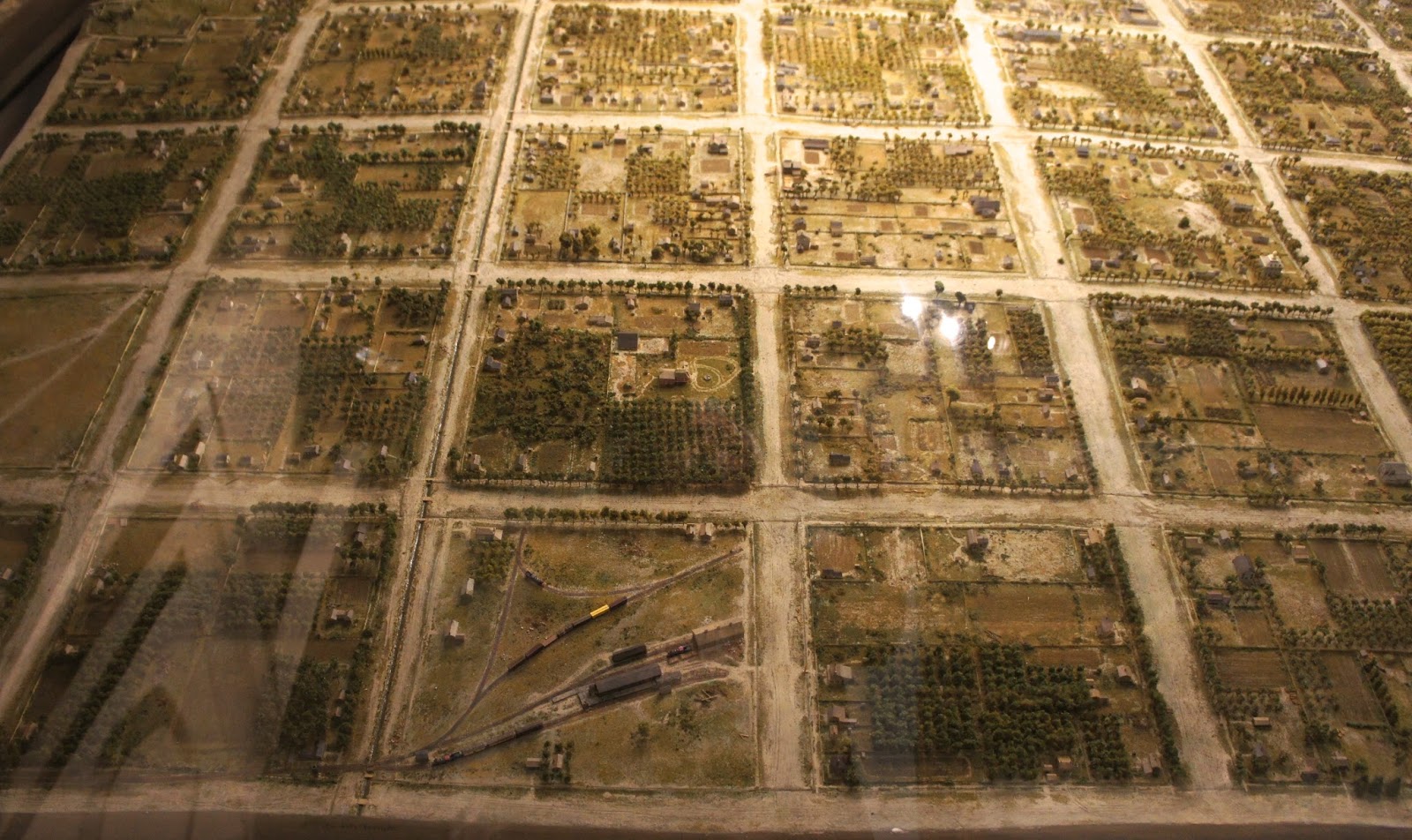
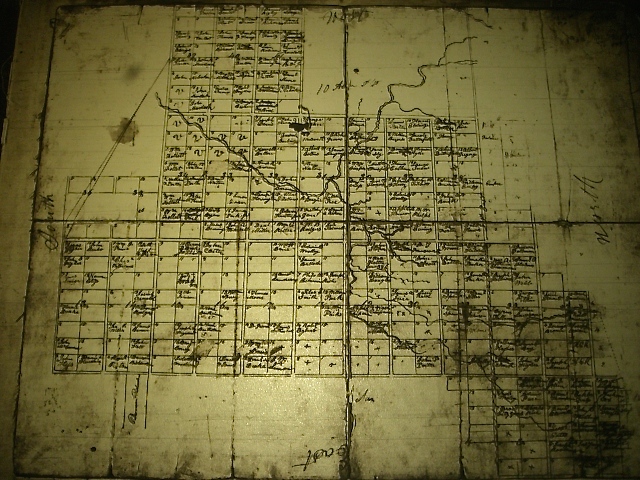
Albert Griffin was granted a city lot in Block-82 soon after his arrival in the Salt Lake Valley. When the trains came into the valley the track ran throughout the middle of Albert's old Lot-82. The Griffins early on left the city and moved onto the Church Farm. The 1850 census shows the household of Albert Griffin, which included four children from another family that he was sheltering. Albert was one of the first men to acquire farm land in Sugar House. The farm was located along Kanyon Creek. By the time of the 1860 census Albert's household included his two hired hands. With his growing farm and cattle herds Albert was one of the first 250 men in Utah to apply for a cattle brand. His brand was the number "10".  By 1852 Albert had joined the Cottonwood Militia which include the Church Farm. Click on images to enlarge.


Charles E Griffin Chapter-3 Winter Quarters


Charles E Griffin Chapter-2 Nauvoo

The move from Ohio to Nauvoo was made much easier by the canal system in Ohio. We have two deeds from Nauvoo. One is the purchase of the farm in Pilot Grove the second is for the sale of the property. The pictures where taken at the exact location of the farm. Click on images to enlarge.


Charles E Griffin Essex to Munson

The story for Charles starts on the original home lot for his grandfather Samuel Griffin, Lot 81, in Essex, Vermont. The first stop for the Griffins in Ohio was in the township of Newbury. The family then moved to next-door Munson where Charles's father, Albert, began to accumulate property in Lot 10. On one of the deeds we find Albert's signature the final act in retiring a mortgage.


Saturday, December 8, 2012

Zilpha Buell Griffin


One of the enduring mysteries in our family was the identity of Zilpha Griffin who was buried next to Samuel and Mercy Griffin in the Essex Common Burial Ground. As is true in many of the cemeteries of that time you find families buried in groups, in a family plot, as it were. Buried along one row you find Samuel and Mercy Bailey Griffin, their son John and his two children Truman Griffin and Chloe Griffin. Next to them is a headstone with the inscription “June ye 11, AD 1799 In memory of Zilpha Griffin wife of Samuel Griffin Jun’r in the 18 yr of her age”.   The condition of the headstone, which had become very deteriorated, added to the mystery.  When the cemetery records were transcribed the transcriber wrote down a 48 adding parentheses indicating some uncertainty. For us an age of 48 did not fit into any family pattern that would allow us to establish her identity even though her headstone identified her as the wife of a Samuel Griffin. We were all left to puzzle over the fact that we seemed to be missing something. We all were haunted by the fact that if she was in fact the wife of Samuel Griffin Jun’r she was being kept out of the family circle. With the discovery of additional information we came to realize the   misread 48 was in fact an 18. If her age at the time of her death was 18 then she must have indeed been the first wife of Samuel Griffin identified on her headstone as Samuel Griffin Jun’r who later married Sylvia Bradley. This also helped explain the name of Samuel’s first child a daughter who he named Zilpha Griffin. We considered the fact that the child Zilpha may have been named after her mother who may have died in childbirth.  But in the 1800 Census there are no children in Samuel and Sylvia’s household. So Zilpha Griffin the daughter of Sylvia Bradley was named in memory of Zilpha Buell an act of real family compassion from a second wife.
So how did we discover the identity of Zilpha Buell Griffin? On one trip to the Genealogy Library I found myself with a little extra time. I had been thinking of adding a little Essex flavor to the Blog. On the spur of the moment I decided to spend a little time going through the town records, which I had not visited for some time. In the back of Volume Two I ran across twenty or so pages of family records from the earliest days in Essex that I did not ever remember seeing. They were organized under the name of the head of the house. At some point a town clerk had gathered all of the information on a family and entered it as a single grouping of information, births, deaths and marriages. As I surveyed the material looking for family names a random name caught my attention, Orange Buell. The heading was for the family of Samuel and Rachel Buell. It listed four children born in Essex one of which one was Orange, and on the far right it listed family death records one of which read “Zilpha Buell, June 11, 1799”. The name Zilpha and the date 1799 jumped out at me. That was a name and a date that I was familiar with, “Zilpha Griffin, June 11, 1799 wife of Samuel Griffin Jun’r” from the Essex Common Burial Ground. Intrigued by the fact that I had found a Zilpha and a date of 1799 all in the very small town of Essex I had the profound impression that I had solved the puzzle. Following up on the lead I discovered that the family of Samuel Buell had moved to Essex from Killingworth arriving a little earlier than the Griffins. It is almost a certainty that they would have known each other.  In Killingworth Zilpha’s date of birth is recorded as  “Zilpha Buell daughter of Samuel & Rachael born July 3, 1781” which would make her 18 in 1799. We had discovered the identity of our Zilpha. Found on a day in which I had not even considered her name, in a film I had picked randomly out of several possibilities, in a record that I had not even suspected existed, under a name, which held no family connection. A name crying out from beyond the veil, found without anyone looking, Zilpha Buell Griffin.

Monday, August 27, 2012

Since God is we ought


The idea of the Lords House, a Temple,  is interwoven throughout our entire body of scripture. The Temple has existed in multiple places and multiple forms all the way from a simple stone alter to the magnificent structure of Solomon’s Temple.  The temple keys have been present at many times and places throughout the dispensations. The wonder of the Temple has influenced not only the believers but also the world at large. The mysteries of the temple have been sought after from the Hamitic line in Egypt all the way up to Jewish mystics of today.  Groups have recognized the loss of these ultimate truths at various points of history.  The Jews most noticeably after rebuilding the temple after its first destruction said it was missing many things such as the Ark of the Covenant, the holy eternal fire, and the spirit of the Lord.  They didn't realize that they themselves were missing the higher covenant from their temple, the covenant that their forefathers had received.  We see in Genesis that Abraham, Isaac, and Jacob at the place called Bethel (literally translated the house of the lord) received messengers from the Lord and received the Covenant from God of everlasting families and children in number beyond the stars of the sky and all were renamed by the Lord, Jacob most notably became Israel.  The message repeats itself in Isaiah, “And the key of the house of David will I lay upon his shoulder, so he shall open and none shall shut” and in Revelations,  “and in a stone a new name written” and Mosiah, “and I give unto them a name”. The temple discusses our earliest ancestors Adam and Eve.  We see this theme and other parts of the mysteries played out in rituals from many cultures in almost every age. The Egyptians death ritual has the first man, Atรบm, being tested to enter heaven; they wore a sacred garment on death with appropriate symbolism. This is something we see among the early Chinese as well. The Egyptians sought to replace the priesthood, which was lost to them. The Zoroastrians from the time of Persia up to modern times have a temple like ceremony and wear a white garment throughout their lives as a sign of their promises to God, a God different in name, but incredibly similar to Jehovah.  The Mandeans, a gnostic church from soon after the time of Christ, a group that still exists today in small numbers, also discusses Adam in their sacred ceremonies and the sacred knowledge and signs needed to enter heaven.  Brigham Young famously said that the purpose of the temple is to receive the signs and tokens needed to pass by the sentinel angels and enter heaven.  From mysticism to freemasonry we can see vestiges of the truth lost to be regained in modern times.  Although there is very little description of the temple ceremonies, including baptism for the dead, in ancient scripture there is ample evidence that the ancient prophets were well versed in these “mysteries”.  Although the Temple Keys have always existed the work of saving the dead will reach its peak in this the Dispensation of the Fullness of Times.
 
The central message of the Gospel is The Plan of Salvation. These principals are taught in one form or fashion by all the Worlds Christian denominations. Sadly as religion has, as they say in the vernacular, became more “progressive” salvation has become an abstract idea. Even among the more orthodox The Plan of Salvation is a poorly understood principal. For those of us gifted with a testimony of the restored gospel it has a very different reality. One of its most beautiful concepts is that of the eternal family a concept so beautifully taught to Jacob who became Israel in the process. That precept and the Temple Keys that make the work possible are present in our day to a degree never before seen. The heavens have been opened, the gospel has been restored, the priesthood keys have been delivered and the dead are speaking. They are calling on us to do their work; they are present in the Temples proclaiming their acceptance and joy. It has been my observation that the Griffins of early America were religious people. They did in fact believe in their God. As I have researched these families I find myself looking for clues as to their religious convictions. I find it very comforting when I come to the conclusion that they will accept the work. I can testify that there are people working on both sides of the Veil to bring about this marvelous work. One of the more recent families I have been working on is the family of Daniel Stevens and Mercy Griffin. That project was blessed with the discovery of a collection of letters preserved in the Connecticut State Library. The letters were written in the time frame of 1850 to 1870. They paint a picture of a very loving family. Deeply involved in caring for each other and their widowed father. The letters primarily revolve around their concern for their two brothers serving in the Civil War, Ellis and Emerson who survived, among others, the battles of Antietam and Fredericksburg. The primary letter writer is their sister Sabra who married Harlow Lewis. Her letters are poignant with her concern for the boys. They in turn write that with the passing of their mother she has stepped in to fill that role in their lives.  What follows is an excerpt from one of her letters. See if you get a sense of their belief in salvation and family.

 I trust that the message will inspire all of us to lengthen our stride as we perform this important work of saving our family.

Sabra had been discussing the number of funerals in town including a woman who “left a babe two days old.” “Death is all around us. The new year seems eager to fill its numbers……Our time will come ere long and if we are ready it will not be an unwelcome messenger to us. We shall be glad to lay this weary body to rest and be free from care and sin. We have the promise that if we are truly his we shall be at rest.  I hope we all shall meet in heaven. The departed ones that have left us, which I trust, are those waiting to welcome us home. I do feel very sad today. I am thinking where I was three years ago. Life very different than the scene I witnesses then and Friday it will be three years since my mother one the best of mothers died. She is gone never to return but we may one day go to her. This is a comfort to think that we may meet if we are faithful to the end  AND SINCE GOD IS WE OUGHT’.